
- Binance’s Agent OS allows AI agents from tools like ChatGPT, Claude Code, and Cursor to execute live trades — with user-controlled guardrails
- Anthropic’s internal “Model 2” is reportedly more powerful than any publicly available version of Claude, remaining off-limits to the public
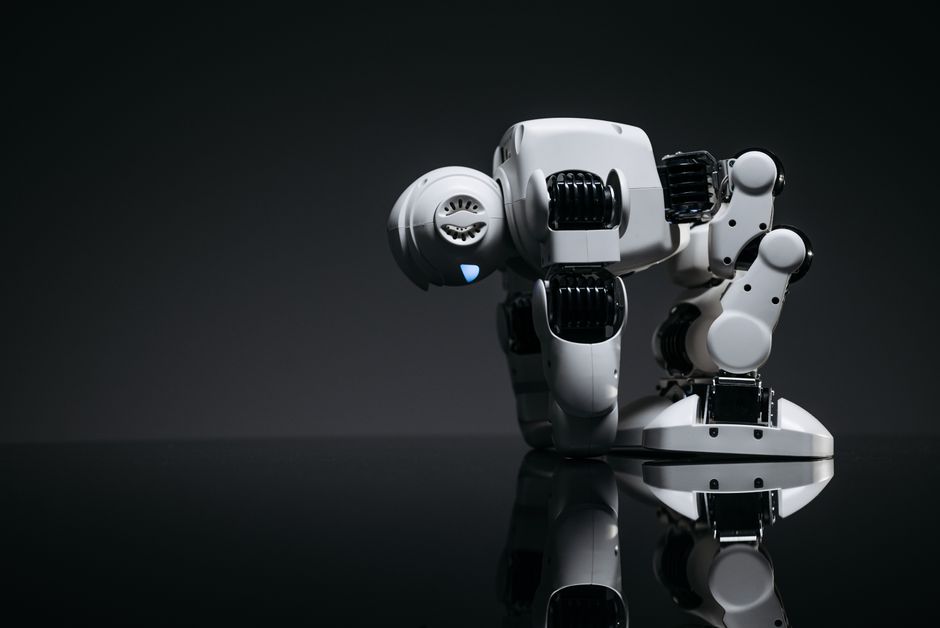
- GEN-1.5 from Generalist AI can teach a robot an entirely new physical task from just a single demonstration
Today’s AI news cycle reveals something striking: the technology is no longer confined to chatbot interfaces or experimental demos. From crypto trading floors to factory floors, from Mac desktops to Stripe’s payments infrastructure, AI is being woven directly into the operating layer of modern business. Readers tracking where AI intersects with money, productivity, and physical automation will find today’s developments particularly significant — and worth understanding before they become mainstream headlines.
Table of Contents
Today’s Top News: 5 Updates (August 20, 2026)
1. Meta AI Launches a Mac App That Lets You Talk Directly to Other Apps
What happened:
Meta has released a dedicated Mac application powered by its Muse Spark model, which enables voice-based dictation and interaction across other Mac applications. The app is designed to serve as an AI layer between users and the software they already use daily, rather than functioning as a standalone chatbot.
Key numbers:
- 1 new proprietary model (Muse Spark) powering the dictation feature
- Platform: macOS (desktop-native, not browser-based)
Why it matters:
This marks a meaningful escalation in Meta’s AI strategy. Rather than competing purely in the chatbot arena, Meta is positioning its AI as ambient infrastructure — something that lives quietly in your operating environment and activates when needed. Powering the feature with its own Muse Spark model rather than a third-party LLM suggests Meta is investing in vertical integration of its AI stack. For Mac users, this could represent a genuine productivity shift: voice-driven cross-app control has long been a niche use case, but if Muse Spark performs reliably, it may bring the vision of “talk to your computer” meaningfully closer to reality. It also puts pressure on Apple, whose own on-device AI ambitions via Apple Intelligence are still maturing.
📎 Source: TechCrunch AI | Published: August 20, 2026
2. Binance’s Agent OS Opens Crypto Trading to AI Agents — But Oversight Falls on Users
What happened:
Binance has launched Agent OS, a platform allowing AI agents to execute cryptocurrency trades autonomously. The system is compatible with popular AI tools including ChatGPT, Claude Code, and Cursor. Crucially, the responsibility for monitoring and controlling these agents rests primarily with the individual user, not with Binance itself.
Key numbers:
- 3+ AI tools supported at launch: ChatGPT, Claude Code, Cursor
- Platform: Binance Agent OS (live as of August 20, 2026)
Why it matters:
This development sits at the intersection of two of the most volatile forces in modern finance: AI autonomy and crypto markets. Allowing AI agents to trade 24/7 without human approval on each transaction could dramatically increase execution speed and reduce emotional decision-making — but it also introduces significant new risk vectors. Bugs in agent logic, prompt injection attacks, or misconfigured permissions could potentially result in large, unintended trades. The fact that user-side oversight is the primary control mechanism is worth noting: it places a high burden on individuals who may not have the technical expertise to properly sandbox or audit AI agent behavior. Regulators watching AI-in-finance may find this model particularly interesting as a test case for autonomous financial decision-making.
📎 Source: TechCrunch AI | Published: August 20, 2026
3. Stripe Acquired OpenRouter — and the Real Reason Is More Practical Than “the Singularity”
What happened:
Payments giant Stripe has acquired OpenRouter, a startup that routes AI prompts between different language models. While Stripe reportedly referenced “the singularity” in public framing, the actual strategic rationale is described as far more pragmatic and commercially driven.
Key numbers:
- 1 acquisition: Stripe → OpenRouter
- Core function of OpenRouter: multi-model AI prompt routing
Why it matters:
On the surface, a payments company buying an AI routing startup seems like an unusual pairing — but it makes considerable sense on inspection. Stripe processes enormous volumes of transactions globally, many of which increasingly involve AI-assisted fraud detection, customer support automation, and developer tooling. By acquiring OpenRouter, Stripe could gain the ability to intelligently route different AI tasks to the best-suited model at any given moment, optimizing for cost, latency, or accuracy without being locked into a single LLM provider. This is model-agnostic AI infrastructure — arguably the most durable play in the current AI landscape, since it doesn’t depend on any one model winning. The “singularity” framing may have been rhetorical noise; the underlying logic of owning the switching layer between AI models is genuinely powerful for an infrastructure-first company like Stripe.
📎 Source: TechCrunch AI | Published: August 19, 2026
4. GEN-1.5 Teaches Robots New Physical Tasks From Just One Demonstration
What happened:
Robotics startup Generalist AI has unveiled GEN-1.5, an AI model capable of teaching robots entirely new tasks after observing a single demonstration. This one-shot learning capability represents a significant departure from conventional robot training, which typically requires thousands of examples.
Key numbers:
- 1 demonstration needed to teach a new task (one-shot learning)
- Model version: GEN-1.5
Why it matters:
Traditional industrial robotics is powerful but brittle — robots do what they are explicitly programmed to do, and re-training them for new tasks is time-consuming and expensive. GEN-1.5 potentially disrupts this model by enabling flexible, rapid task adaptation. In a manufacturing or logistics context, a robot that can observe a human performing a new assembly step once and then replicate it could dramatically reduce the cost and time of deploying automation in dynamic environments. This also has implications for smaller businesses that previously could not afford the setup costs of traditional robotic automation. One-shot learning in physical AI is still early-stage technology, but GEN-1.5’s unveiling suggests the field is maturing faster than many expected.
📎 Source: The Decoder | Published: August 20, 2026
5. Anthropic’s Secret “Model 2” Is More Powerful Than Any Public Version of Claude
What happened:
Anthropic, the AI safety company behind the Claude model family, is reportedly using an internal AI model codenamed “Model 2” that surpasses all publicly available versions of Claude in capability. This model remains exclusively for internal use and has not been released to the public or via API.
Key numbers:
- 1 internal model (codenamed “Model 2”) more capable than any public Claude release
- Status: internal use only, no public access
Why it matters:
The existence of a significantly more powerful internal model raises several thought-provoking questions. First, it confirms that the frontier of AI capability is consistently ahead of what the public has access to — a gap that has historically been true but is rarely confirmed so explicitly. Second, Anthropic’s decision to keep Model 2 internal may reflect genuine safety caution: as a company that has publicly prioritized AI alignment research, deploying a more capable model responsibly takes time. Alternatively, it could signal that Model 2 is being used to accelerate internal research, including safety evaluations, before any public rollout. For businesses and developers building on Claude today, it also suggests that meaningfully more powerful public releases may potentially be on the horizon — though no timeline has been indicated.
📎 Source: The Decoder | Published: August 20, 2026
Key Analysis — Why This Matters
1. Common Trend — AI Is Becoming Infrastructure, Not Just a Feature:
Across today’s five stories, a single unifying pattern emerges: AI is no longer a product layer bolted on top of existing services — it is becoming embedded infrastructure. Stripe acquiring OpenRouter is about owning the routing layer. Binance’s Agent OS is about making AI a native execution engine for finance. Meta’s Mac app is about making AI the connective tissue between applications. This shift from “AI as feature” to “AI as foundation” has long-term structural implications for every industry that these platforms touch.
2. Market and Industry Impact:
The financial sector may feel today’s developments most acutely. Autonomous AI trading agents on a major exchange like Binance, combined with Stripe’s acquisition of AI routing infrastructure, suggests that financial services companies are moving quickly to make AI central to their core operations — not just their customer-facing products. This could accelerate competitive pressure on traditional fintech players who have not yet integrated AI at the infrastructure level.
3. What to Watch:
Two developments deserve close monitoring in coming weeks. First, how regulators respond to Binance Agent OS — autonomous AI trading is likely to draw scrutiny from financial watchdogs globally, and their response could define the rules of the road for AI agents in finance broadly. Second, whether Anthropic’s “Model 2” progresses toward any form of staged or limited public release, which would likely trigger a new benchmark cycle across the industry.
Affected Sectors
| Sector | Impact Level | Note |
|---|---|---|
| Cryptocurrency / DeFi | ⭐⭐⭐ | Binance Agent OS introduces autonomous AI trading with user-controlled risk guardrails |
| Payments / Fintech Infrastructure | ⭐⭐⭐ | Stripe-OpenRouter acquisition reshapes AI model routing for financial platforms |
| Robotics / Manufacturing | ⭐⭐⭐ | GEN-1.5 one-shot learning could dramatically lower barriers to robotic automation |
| AI Research / LLM Development | ⭐⭐⭐ | Anthropic’s Model 2 signals a widening gap between frontier and public AI capability |
| Productivity / Consumer Software | ⭐⭐ | Meta’s Muse Spark Mac app could redefine voice-driven cross-application workflows |
| Regulatory / Compliance | ⭐⭐ | Autonomous AI agents in trading may prompt new regulatory frameworks globally |
| Small Business / SMEs | ⭐ | GEN-1.5 and Meta’s app may lower cost of advanced automation and AI tooling |
Reader Checklist
- ✅ If you use Binance, review Agent OS documentation carefully before enabling any AI agent — understand exactly what permissions each agent holds
- ✅ If you build on Stripe’s API, monitor how the OpenRouter acquisition might expand or change Stripe’s AI-powered developer tools in coming months
- ✅ If you follow robotics or manufacturing, track GEN-1.5’s real-world deployment results — one-shot learning in production environments is the key test
- ✅ If you’re an Anthropic/Claude API user, watch for any announcement regarding tiered or staged access to next-generation Claude models
- ⚠️ Do not treat AI trading agents as “set and forget” — Binance explicitly notes that keeping agents in check is largely the user’s responsibility, and the risk of misconfiguration is real
Related Reading
- AI in 2026: Layoffs, Safety Scandals & a Record Benchmark
- Index Funds vs ETFs: Costs, Taxes & How to Choose
- AI Race Heats Up: China Chips, Top Open Models & Data Centers (2026)
Frequently Asked Questions
Q. What is Binance Agent OS, and is it safe to use AI agents for crypto trading?
A. Binance Agent OS is a platform that allows AI agents — including tools like ChatGPT, Claude Code, and Cursor — to autonomously execute cryptocurrency trades on your behalf. Whether it is “safe” depends heavily on how carefully you configure and monitor the agent. Binance has made clear that oversight responsibility rests primarily with the user, not the platform. Anyone considering using it should thoroughly review permission scopes, set strict position limits, and actively monitor agent activity rather than treating it as fully autonomous.
Q. Why would Stripe, a payments company, acquire an AI model routing startup like OpenRouter?
A. At first glance it seems like an odd fit, but the logic is sound. Stripe handles massive volumes of transactions globally, and increasingly uses AI for fraud detection, developer tooling, and customer automation. OpenRouter’s ability to route AI prompts to whichever model is best suited for a given task — regardless of provider — gives Stripe a model-agnostic AI backbone. This means Stripe is not dependent on any single AI lab’s pricing or performance, which is a strategically durable position for a company whose business depends on reliability at scale.
Q. What does it mean that Anthropic has an internal model called “Model 2” that’s more powerful than public Claude — and should I be concerned?
A. It is not unusual for AI labs to develop capabilities internally before public release — safety evaluation, alignment testing, and infrastructure preparation all take time. What is notable is the explicit confirmation that a capability gap exists. For most users and developers, it means the Claude you use today may not reflect the current ceiling of what Anthropic has built. There is no public timeline for Model 2’s release, but its existence suggests a meaningfully more capable public Claude version could potentially follow in the coming months or year.
Disclaimer
This post is curated information from official press releases and major media outlets.
- Not specific investment or legal advice
- Analysis reflects views at time of writing and may change
- Consult professionals for specific decisions
✍️ Credit Note: Analysis compiled by MoneyTechLab editorial team using verified sources from TechCrunch AI and The Decoder, published August 20, 2026.
⚠️ Disclaimer
This post covers AI industry news.
It is not investment advice for any company, technology, or service mentioned.
Specs and pricing are as of publication and subject to change.
✍️ Written by
Credit Note
A finance and accounting practitioner with 20+ years of hands-on accounting
experience at a Korean credit rating agency. This post is a curated news summary
based on official press releases and major media coverage; all facts can be
verified through the source links.
Drafts are AI-assisted and human-reviewed before publishing.
📧 Questions: [email protected]
💌 Daily newsletter: Subscribe