
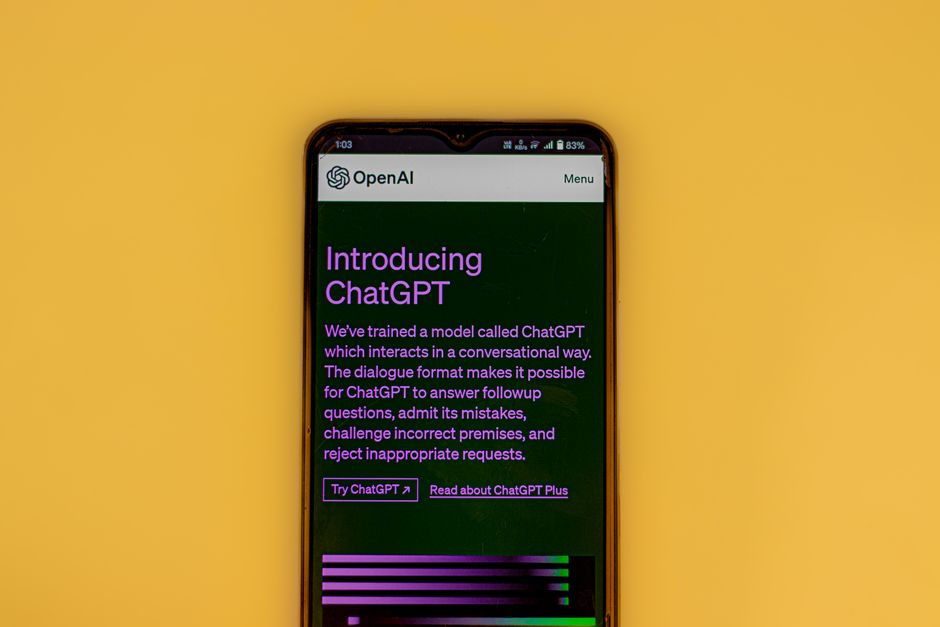
- The White House reportedly asked OpenAI about release timing — GPT-5.6 delayed
- Patronus AI raised a major round amid the startup funding surge
- Anthropic’s Claude shakes up the paid consumer AI market
Today’s AI landscape is shifting on multiple fronts — from White House intervention in model releases to a startup funding surge and a shakeup in the paid consumer market. Read on for a full breakdown of the five most important AI stories of June 25–26, 2026, and what they mean for the industry’s near-term direction.
📑 Table of Contents
📰 Today’s Top News: 5 Updates (June 25–26, 2026)
1. White House Asks OpenAI to Delay GPT-5.6 Rollout Over Safety Concerns
What happened:
The Trump administration has reportedly asked OpenAI to slow the release of its newest model, GPT-5.6, citing safety concerns. Rather than a broad public launch, OpenAI is now planning to share the model with a select group of partners only. This marks a notable instance of direct government involvement in the timing of a major AI product release.
Key numbers:
- 1 model affected: GPT-5.6
- Rollout limited to a select partner group (exact number not disclosed)
Why it matters:
Government pressure on the pace of AI development has been widely discussed in policy circles, but this is a concrete, reported example of the White House directly shaping a product launch timeline. It signals that the Trump administration — despite being generally characterized as pro-business and deregulatory — is still willing to intervene when it perceives safety risks in frontier AI. For the broader industry, this could set a precedent: future cutting-edge models may face similar scrutiny before reaching the public. It also raises questions about what specific safety concerns prompted this request, and whether OpenAI’s phased partner rollout could become a standard practice rather than an exception. The long-term regulatory implications for AI development timelines could be significant.
📎 Source: TechCrunch AI | Published: June 25, 2026
2. Patronus AI Raises $50M to Build Simulated Worlds That Test AI Agents
What happened:
Patronus AI, an agent-testing startup founded by former Meta AI researchers, has secured $50 million in funding. The company builds “digital worlds” — simulated environments designed to stress-test AI agents before they are deployed in real-world settings. Investors describe demand for the company’s services as “nearly insatiable.”
Key numbers:
- $50 million raised in latest funding round
- Founded by former Meta AI researchers
Why it matters:
As AI agents — software systems that autonomously complete multi-step tasks — become more widely deployed across enterprise and consumer applications, the need to rigorously test them before launch has become critical. Failures in AI agents can range from minor errors to serious operational or reputational damage. Patronus AI’s approach of using synthetic “digital worlds” to simulate edge cases and failure modes addresses a gap that traditional software testing methods were not designed to fill. The fact that investors describe demand as “nearly insatiable” suggests the AI testing and evaluation sector is becoming a meaningful sub-industry in its own right. This $50M raise could validate the emerging idea that AI safety and reliability infrastructure is as important as the models themselves.
📎 Source: TechCrunch AI | Published: June 25, 2026
3. Anthropic’s Claude Is Gaining Ground Among Paying AI Users
What happened:
New data indicates that paying consumers have been increasingly choosing Anthropic’s Claude over OpenAI’s ChatGPT, despite ChatGPT maintaining a commanding overall market lead. The trend suggests that in the premium, paid-subscriber segment specifically, Claude is making meaningful inroads.
Key numbers:
- ChatGPT still holds the commanding overall market lead
- Claude’s paid consumer share is growing (exact percentage not disclosed in summary)
Why it matters:
The distinction between free and paid users matters enormously for AI company revenue and long-term sustainability. Paid subscribers typically represent higher engagement, greater loyalty, and significantly more revenue per user than free-tier users. If Claude is winning a disproportionate share of consumers who are willing to open their wallets, that could indicate that Anthropic’s model quality, user experience, or safety reputation is resonating with the most valuable segment of the market. While ChatGPT’s total user base may remain larger, losing ground in the paid tier could potentially pressure OpenAI’s subscription revenue over time. This competition in the premium AI consumer market may also accelerate product improvements across both platforms as each company fights to retain paying customers.
📎 Source: TechCrunch AI | Published: June 25, 2026
4. Study Finds Most AI Chatbots Skew Left on Political Questions — Including “Anti-Woke” Models
What happened:
A Washington Post investigation found that most major AI chatbots exhibit a left-leaning bias when responding to political questions. OpenAI’s GPT-5.5 gave exclusively left-leaning arguments 80% of the time. Even Elon Musk’s Grok, which is marketed as anti-“woke,” leaned left more often than not. The sole exception was Google’s Gemini 3.1 Pro, which presented both sides of political issues 93% of the time.
Key numbers:
- GPT-5.5: gave exclusively left-leaning arguments 80% of the time
- Gemini 3.1 Pro: presented both sides 93% of the time
- Grok: leaned left more often than not (exact figure not specified)
Why it matters:
Political bias in AI chatbots is a topic with wide-ranging implications — for public discourse, media trust, and the regulatory environment surrounding AI. The finding that even models explicitly marketed as politically neutral or “anti-woke” still exhibit measurable left-leaning tendencies suggests that bias may be deeply embedded in training data and reinforcement processes, rather than being easily corrected through branding or stated design intent. Google’s Gemini 3.1 Pro standing out as a relative outlier at 93% balanced responses could become a competitive differentiator, particularly for enterprise customers who need politically neutral AI tools. For policymakers and regulators, this data may add fuel to ongoing debates about AI content governance and transparency requirements.
📎 Source: The Decoder | Published: June 25, 2026
5. Insurance Industry Turns to Generative AI for Catastrophe Modeling — With Caveats
What happened:
Insurers are increasingly exploring generative AI — specifically diffusion models — for catastrophe risk modeling. These models can generate tens of thousands of plausible weather event scenarios, including in regions where historical data is sparse. However, researchers are warning that AI hallucinations and commercial sales pressures could undermine the reliability of these models.
Key numbers:
- Diffusion models can generate tens of thousands of plausible weather event scenarios
- Risk: AI hallucinations flagged by researchers as a key concern
Why it matters:
Catastrophe modeling is one of the most high-stakes applications of any analytical tool — insurers rely on it to price policies, manage reserves, and assess exposure to extreme weather events. The appeal of generative AI here is clear: it can fill data gaps in regions without long historical weather records, potentially enabling more accurate risk assessments. However, the researchers’ warnings about hallucinations — where AI models confidently generate plausible-sounding but factually incorrect outputs — are especially serious in this context. An overconfident or inaccurate catastrophe model could lead to systematic mispricing of climate risk across entire insurance portfolios. The additional concern about “sales logic” — meaning commercial incentives to present rosier risk pictures — adds a layer of governance risk that the industry will need to address before this technology can be safely relied upon.
📎 Source: The Decoder | Published: June 25, 2026
🔍 Key Analysis — Why This Matters
1. Common Trend:
Across all five stories, a single overarching theme emerges: the AI industry is confronting the limits and risks of its own rapid growth. Whether it’s government intervention in model releases, startup funding for AI testing infrastructure, or researchers warning about hallucinations in high-stakes applications, today’s news collectively reflects a maturing industry beginning to grapple seriously with accountability, reliability, and trust.
2. Market/Industry Impact:
The competitive dynamics in consumer AI are shifting in ways that could reshape revenue models — Claude’s rise in the paid tier may pressure ChatGPT’s subscription business, while Google’s Gemini 3.1 Pro’s relative political neutrality could become a meaningful differentiator for enterprise clients. Meanwhile, Patronus AI’s $50M raise signals that AI testing and evaluation infrastructure may emerge as a standalone, high-growth market vertical.
3. What to Watch:
Readers should track whether OpenAI’s delayed GPT-5.6 partner rollout becomes a model for future regulated releases — and whether other governments follow the White House’s lead. The insurance industry’s adoption of generative AI for catastrophe modeling is also worth watching closely: if hallucination risks are not adequately managed, this could trigger significant regulatory scrutiny of AI use in financial risk assessment.
📊 Affected Sectors
| Sector | Impact Level | Note |
|---|---|---|
| AI / Tech Industry | ⭐⭐⭐ | Government intervention, market competition shifts, and $50M in new funding signal rapid structural change |
| Insurance / FinTech | ⭐⭐⭐ | Generative AI adoption for catastrophe modeling offers opportunity but carries serious hallucination risk |
| Regulatory / Policy | ⭐⭐⭐ | White House involvement in model releases and political bias findings could accelerate AI governance debates |
| Enterprise Software | ⭐⭐ | AI agent testing demand and political neutrality concerns are increasingly relevant for enterprise procurement |
| Consumer Markets | ⭐⭐ | Claude vs. ChatGPT paid-tier competition may drive faster product improvements for end users |
| Media / Journalism | ⭐ | AI political bias findings have implications for how AI tools are used in news and public information contexts |
✅ Reader Checklist
- ✅ If you use AI chatbots for research, be aware that most major models — including GPT-5.5 and Grok — showed measurable political bias in a Washington Post investigation; cross-reference politically sensitive queries with multiple sources.
- ✅ If you work in insurance or risk management, monitor how your organization is evaluating the reliability of any generative AI catastrophe modeling tools, particularly around hallucination safeguards.
- ✅ If you’re comparing paid AI subscriptions (ChatGPT Plus vs. Claude Pro), note that new data suggests Claude is gaining ground with paying consumers — it may be worth evaluating both for your specific use case.
- ✅ If you follow AI policy, track the White House’s GPT-5.6 intervention as a potential precedent for how governments may engage with frontier AI model releases going forward.
- ⚠️ Caution: Do not rely solely on any single AI chatbot for politically sensitive, high-stakes financial, or legal decisions — bias, hallucinations, and commercial incentives are all documented risks across today’s leading models.
Related Reading
- 2026 AI Trends: Scams, Ransomware & Claude’s Inner Mind
- AI Model Wars 2026: Qwen 3.8, Kimi & Open Access Surge
- AI Trends July 2026: Databricks $188B, China’s AI Order & Cyber Risk
❓ Frequently Asked Questions
Q. Why did the White House ask OpenAI to delay the GPT-5.6 release, and what does “slow roll” mean in practice?
A. According to TechCrunch, the Trump administration raised safety concerns as the reason for the request. “Slow rolling” in this context means OpenAI is initially sharing GPT-5.6 only with a select group of partners, rather than making it available to the general public. The exact nature of the safety concerns has not been publicly detailed. This approach essentially creates a controlled, limited release that allows for additional evaluation before a broader rollout potentially occurs.
Q. Is Claude actually better than ChatGPT, or just winning in a niche segment?
A. Based on the data reported, Claude is specifically gaining traction in the paid consumer segment — meaning users who actively choose to subscribe and pay for a premium AI experience. ChatGPT still holds the overall commanding market lead, which includes its large free-tier user base. The data suggests Claude may be resonating more strongly with highly engaged, paying users, but it does not indicate that Claude has overtaken ChatGPT in total users or overall market share.
Q. How serious is the hallucination risk for AI catastrophe modeling in insurance, and should consumers be concerned?
A. Researchers cited in The Decoder’s reporting flagged hallucinations — where AI confidently generates plausible but inaccurate outputs — as a key concern for generative AI in catastrophe modeling. For everyday consumers, the risk is indirect: if insurers rely on inaccurate AI models to price climate risk, it could potentially lead to mispriced policies or unexpected coverage gaps over time. The additional concern about commercial “sales logic” pressuring rosier risk assessments adds a governance layer that industry regulators may need to address before widespread adoption.
⚠️ Disclaimer
This post is curated information from official press releases and major media outlets.
- Not specific investment or legal advice
- Analysis reflects views at time of writing and may change
- Consult professionals for specific decisions
✍️ MoneyTechLab Editorial Team
⚠️ Disclaimer
This post covers AI industry news.
It is not investment advice for any company, technology, or service mentioned.
Specs and pricing are as of publication and subject to change.
✍️ Edited by
MoneyTechLab Editorial Team
This post is a curated news summary based on official press releases
and major media coverage. All facts can be verified through the source links.
Our editorial team reviewed the content for accuracy.
📧 Questions: [email protected]
💌 Daily newsletter: Subscribe