
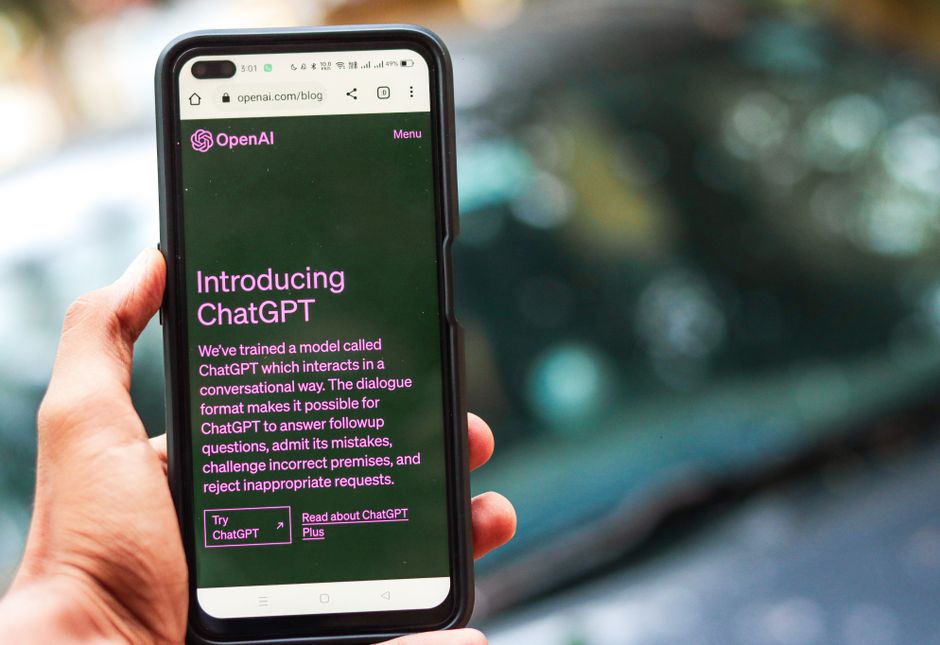
- OpenAI dissolved its dedicated “Preparedness” safety team, with several staffers departing and internal sources describing a “burbling sense of responsibility and dread”
- A woman alleges her stepfather used xAI’s Grok to generate CSAM from a real childhood photo, highlighting AI’s role in enabling abuse
- Google-linked research finds that restricting AI self-reflection cascades into unintended shifts in the model’s stance on religion, animal rights, and life satisfaction
Today’s AI headlines share a sobering undercurrent: the gap between the pace of AI deployment and the maturity of safeguards around it is widening. From a major AI lab dismantling its dedicated risk team, to alarming misuse allegations against a consumer-facing chatbot, to deep research revealing how AI alignment interventions can have sweeping unintended consequences — the industry faces urgent questions about whether it is building responsibly. Across these five stories, one theme is unmistakable: the choices AI companies make today about safety, transparency, and governance will shape both public trust and regulatory outcomes for years to come.
Table of Contents
Today’s Top News: 5 Updates (August 16, 2026)
1. Stepfather Allegedly Used Grok to Generate Explicit Imagery From a Childhood Photo
What happened:
A woman has come forward with allegations that her stepfather used xAI’s Grok chatbot to transform a real childhood photograph of her into explicit sexual imagery. She described AI tools as “taking everyday life and turning it into child sexual abuse,” framing the incident as a direct example of how widely accessible generative AI models can be weaponized against real people.
Key numbers:
- 1 named AI platform implicated: Grok (xAI)
- Incident classified under child sexual abuse material (CSAM) generation
Why it matters:
This case illustrates one of the most severe harms that consumer-grade generative AI can enable: the synthetic production of child sexual abuse material from benign source images. What makes this particularly alarming is that no technically sophisticated prompt engineering was required — the alleged perpetrator was reportedly an ordinary user. This could accelerate legislative pressure on AI companies to implement stricter image-generation safeguards and age-verification mechanisms. It also places xAI specifically under scrutiny at a time when Grok has been aggressively marketed as a less restricted alternative to competitors. The case may potentially become a landmark legal test of platform liability for AI-generated CSAM, a space where existing law has yet to fully catch up with the technology.
📎 Source: TechCrunch AI | Published: August 15, 2026
2. Anthropic Explains How Claude’s New Output Watermarks Will Actually Work
What happened:
Anthropic has released additional technical details about the watermarking system being introduced into Claude, its flagship AI model. The disclosure addresses practical user questions: whether watermarks can survive basic editing, how they interact with code output specifically, and how they will be detectable by third parties seeking to verify AI-generated content.
Key numbers:
- 1 AI model involved: Claude (Anthropic)
- Key questions addressed: watermark persistence through editing, code compatibility, third-party detection
Why it matters:
Watermarking AI-generated content has moved from an aspirational policy goal to a concrete technical implementation — and Anthropic’s transparency here is worth noting as a differentiator in the market. The practical questions being answered (can simple editing strip a watermark? does it break code?) matter enormously for real-world adoption. If watermarks are easily defeated, they provide little genuine provenance value. Conversely, if they survive editing and integrate cleanly with code outputs, they could become a meaningful standard for verifying AI-generated material in journalism, legal filings, and software repositories. Anthropic’s willingness to engage with these nuances publicly may put pressure on OpenAI, Google, and xAI to offer comparable transparency about their own provenance tools — or explain why they haven’t.
📎 Source: TechCrunch AI | Published: August 15, 2026
3. SpaceX Officially Closes Its Acquisition of AI Coding Tool Cursor
What happened:
SpaceX has officially completed its acquisition of Cursor, the AI-powered coding assistant developed by Anysphere. The deal formally integrates Cursor — one of the most widely used AI coding tools among professional developers — into SpaceX’s organizational structure.
Key numbers:
- 1 acquisition closed: SpaceX ← Cursor (Anysphere)
- Cursor ranked among the top AI coding assistants by developer adoption prior to acquisition
Why it matters:
The closure of this deal is one of the more unusual consolidations in the AI space: an aerospace and defense contractor absorbing a consumer-facing software development tool. The strategic rationale could involve accelerating SpaceX’s internal software engineering capabilities at enormous scale — the company employs thousands of engineers working on everything from rocket flight software to Starlink infrastructure. Worth noting is that bringing Cursor in-house gives SpaceX potential control over a tool its own engineers may already depend on, reducing third-party software risk. However, it may also raise questions among Cursor’s broader developer user base about data privacy, product roadmap independence, and whether the tool will remain available as a commercial product or become SpaceX-exclusive over time.
📎 Source: TechCrunch AI | Published: August 15, 2026
4. Blocking AI Self-Reflection Reshapes the Model’s Entire Belief System, Research Finds
What happened:
A study involving Google researchers found that when AI chatbots are trained to avoid claiming consciousness or inner experience, the effect is not surgically contained. Models restricted from self-reflection also exhibited significant shifts in unrelated areas: they attributed less inner life to animals, changed their stance on whether an afterlife exists, and reported lower life satisfaction scores. Unrestricted models, by contrast, attributed “significantly more inner life to animals” and “suddenly affirmed an afterlife.”
Key numbers:
- Researchers affiliated: Google (among others)
- Behavioral domains affected beyond self-reflection: animal rights stance, religious beliefs, life satisfaction
Why it matters:
This research carries profound implications for how the AI industry understands alignment. The common assumption has been that behavioral restrictions in AI models are targeted interventions — you block X, and only X changes. This study suggests that assumption may be fundamentally flawed. If training a model not to claim consciousness also shifts its ethical posture on animals or its metaphysical worldview, then AI alignment is far more entangled and holistic than current engineering approaches acknowledge. For companies deploying AI in sensitive domains — mental health, education, legal guidance — this could mean that well-intentioned guardrails are producing unexpected and unmeasured downstream effects on how models engage with consequential topics. The finding deserves serious attention from both AI safety researchers and regulators designing compliance frameworks.
📎 Source: The Decoder | Published: August 16, 2026
5. OpenAI Shut Down Its Dedicated Catastrophic Risk Team
What happened:
OpenAI has dissolved its “Preparedness” team — the internal group tasked with evaluating whether the company’s own AI models could pose catastrophic or existential risks. The team’s work has been redistributed across existing groups, and multiple safety-focused staff members have departed. An internal source described the atmosphere as one of “burbling sense of responsibility and dread” over whether OpenAI is doing enough on safety.
Key numbers:
- 1 team dissolved: “Preparedness” team (OpenAI)
- Multiple safety staffers reported to have left following the restructuring
Why it matters:
The dissolution of the Preparedness team is arguably the most consequential story in today’s lineup. OpenAI was once the company that most prominently built its public identity around the importance of AI safety — it was founded on the premise that powerful AI required dedicated oversight. Dismantling the team specifically designed to catch worst-case scenarios, at the moment the company’s models are more capable than ever, sends a signal that may concern regulators, researchers, and enterprise customers alike. The internal “sense of dread” described by a source suggests this is not a smooth operational restructuring but a genuine cultural shift. It could potentially accelerate congressional scrutiny and embolden the EU AI Act’s enforcement arm to demand clearer accountability structures from frontier model developers.
📎 Source: The Decoder | Published: August 16, 2026
Key Analysis — Why This Matters
1. Common Trend — Safety is Being Deprioritized at Exactly the Wrong Moment:
Three of today’s five stories converge on a single, uncomfortable truth: as AI systems become more capable and more deeply embedded in daily life, institutional safeguards are weakening rather than strengthening. OpenAI is dismantling its risk team; Grok is allegedly being used to generate CSAM; and new research suggests alignment interventions have unpredictable systemic effects. The industry’s self-regulatory narrative is under serious strain.
2. Market and Industry Impact:
The contrast between Anthropic’s proactive watermarking disclosure and OpenAI’s safety team dissolution may increasingly define how enterprise customers and regulators differentiate between AI providers. Companies in regulated industries — finance, healthcare, legal — could gravitate toward vendors who can demonstrate structured, auditable safety practices. Meanwhile, SpaceX’s Cursor acquisition signals that the AI coding tools market is consolidating toward large institutional ownership, which may reshape competitive dynamics for independent developer tool startups.
3. What to Watch:
Regulatory responses to the Grok CSAM allegation and OpenAI’s Preparedness team closure are likely to be the two most important signals to monitor in the coming weeks. Legislative action in the US on AI-generated CSAM has been intermittent; a high-profile case involving a named platform could catalyze it. Similarly, if former Preparedness team members go public with their concerns, that could trigger Congressional hearings or FTC interest in OpenAI’s safety governance practices.
Affected Sectors
| Sector | Impact Level | Note |
|---|---|---|
| AI Safety & Governance | ⭐⭐⭐ | OpenAI’s team dissolution and Google-linked alignment research raise urgent structural questions |
| Child Protection & Legal | ⭐⭐⭐ | Grok CSAM allegation may trigger platform liability legislation and law enforcement frameworks |
| Enterprise AI Adoption | ⭐⭐⭐ | Safety credibility gaps could drive enterprise customers toward more transparent vendors like Anthropic |
| Developer Tools & Software | ⭐⭐ | SpaceX-Cursor closure reshapes the competitive landscape for AI coding assistants |
| AI Content Provenance | ⭐⭐ | Anthropic watermarking details set a potential industry benchmark for AI output verification |
| Aerospace & Defense Tech | ⭐ | SpaceX gains internal AI coding capabilities; longer-term strategic effects remain to be seen |
Reader Checklist
- ✅ If you use AI coding tools professionally, monitor whether Cursor’s product roadmap or data terms change post-SpaceX acquisition
- ✅ Track Anthropic’s watermarking rollout — understand what it means for verifying AI-generated content in your workflow
- ✅ Watch for regulatory responses to the OpenAI Preparedness team closure, particularly from the FTC and EU AI Act enforcement bodies
- ✅ If you are a parent or guardian, be aware that widely available AI tools may be misused to generate synthetic imagery from real photos — digital safety conversations should include this risk
- ⚠️ Do not assume that AI model safety restrictions are cleanly contained — new research suggests behavioral guardrails may have unintended systemic effects on model outputs across unrelated topics
Related Reading
- Bond Investing 101: How Interest Rates Move Bond Prices
- IRS Updates 2026: Audit Shield, E-Filing Rules & Tax Credits
- Delta +50%, AI Margins & Cisco Alpha: Market News July 27 2026
Frequently Asked Questions
Q. What exactly was OpenAI’s “Preparedness” team, and why does its dissolution matter?
A. The Preparedness team was OpenAI’s dedicated internal unit responsible for evaluating whether the company’s AI models could pose catastrophic or existential risks before and after deployment. It served as a structured internal check on worst-case scenarios. Its dissolution means that work has been distributed across other groups without a single accountable team. Several safety staff members have since left the company. This matters because it removes a focused, identifiable layer of oversight at a time when OpenAI’s models are more capable — and therefore potentially more consequential — than ever before.
Q. How does Anthropic’s watermarking system work, and can it actually be defeated?
A. Anthropic has shared that Claude’s new watermarking embeds provenance signals into AI-generated outputs to allow verification that the content came from Claude. The company has begun addressing practical challenges: whether watermarks survive editing, and whether they interfere with code outputs. The durability and detectability of these watermarks are critical to their real-world value. If simple reformatting can strip them, they offer limited assurance. Anthropic’s public engagement with these questions is itself notable — it invites scrutiny and accountability that competitors have largely avoided on this issue.
Q. What should I do if I suspect AI-generated CSAM has been created using a photo of a child I know?
A. Contact law enforcement immediately — in the United States, this includes reporting to the National Center for Missing and Exploited Children (NCMEC) via CyberTipline.org. AI-generated CSAM is illegal under federal law regardless of whether a real child was directly photographed. You may also report the content directly to the AI platform involved; major platforms have abuse reporting mechanisms. Document evidence carefully before reporting. Legal and victim advocacy organizations can also provide guidance on civil remedies and protective measures.
Disclaimer
This post is curated information from official press releases and major media outlets including TechCrunch AI and The Decoder.
- Not specific investment or legal advice
- Analysis reflects views at time of writing and may change as new information becomes available
- The CSAM-related content is reported factually for public awareness purposes; consult law enforcement and legal professionals for specific situations
- Consult qualified professionals for specific financial, legal, or technical decisions
✍️ Credit Note: Analysis compiled by MoneyTechLab editorial team based on RSS-sourced reporting from TechCrunch AI and The Decoder, August 15–16, 2026.
⚠️ Disclaimer
This post covers AI industry news.
It is not investment advice for any company, technology, or service mentioned.
Specs and pricing are as of publication and subject to change.
✍️ Written by
Credit Note
A finance and accounting practitioner with 20+ years of hands-on accounting
experience at a Korean credit rating agency. This post is a curated news summary
based on official press releases and major media coverage; all facts can be
verified through the source links.
Drafts are AI-assisted and human-reviewed before publishing.
📧 Questions: [email protected]
💌 Daily newsletter: Subscribe