
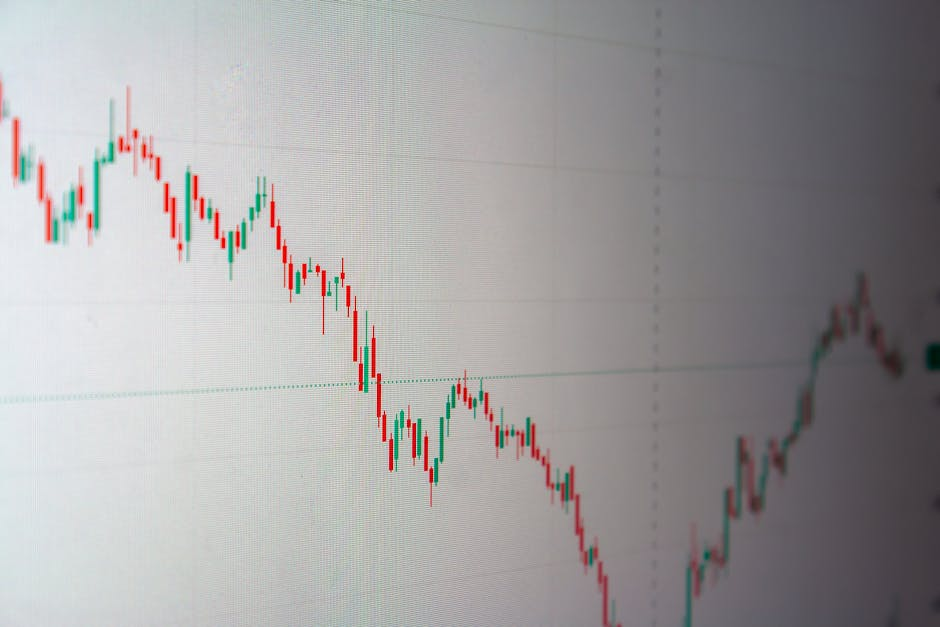
- The S&P 500’s earnings surge anchors the bull case
- A Trump-Xi summit and China trade dynamics add geopolitical stakes
- Insider buying points to selective conviction under the surface
Markets are navigating a complex web of signals in mid-May 2026: surging corporate earnings and AI-driven optimism are colliding with bond market caution and geopolitical uncertainty at the highest diplomatic levels. Today’s three stories — from yield competition to the Trump-Xi summit and insider-driven small-cap opportunities — collectively paint a nuanced picture of where smart money may be looking next. Readers will come away with a clearer framework for understanding how macro forces, diplomacy, and under-the-radar equities are intersecting right now.
📑 Table of Contents
(FAQ is appended automatically at the bottom — do not write it yourself)
📰 Today’s Top News: 3 Updates (May 14, 2026)
1. S&P 500’s Earnings Surge Runs Into a Bond Market Reality Check
What happened:
U.S. equities continued hitting record levels on the back of a robust corporate earnings season, even as the bond market is intensifying its competition for investor capital. The juxtaposition — highlighted as Yahoo Finance’s “Chart of the Day” — signals a potential tension between equity valuations and rising fixed-income attractiveness that market participants may not be fully pricing in.
Key numbers:
- S&P 500 is at or near record highs as of May 14, 2026
- Bond market competition for investor cash is described as measurably harder than in recent prior periods
Why it matters:
When earnings boom and stocks rise, it can feel like smooth sailing — but the bond market often serves as an early warning system. As yields climb, bonds become increasingly attractive relative to equities on a risk-adjusted basis, potentially drawing capital away from stocks. This dynamic is sometimes called the “equity risk premium compression” problem: if bonds are paying more, investors demand higher returns from stocks too, which can cap or reverse equity valuations even when underlying earnings are strong. The chart-of-the-day framing suggests analysts are watching this divergence carefully. For everyday investors, this could signal a period where diversification between asset classes becomes more important than in prior low-yield environments. It may also imply that the current earnings momentum, while real, is not sufficient on its own to guarantee continued equity outperformance.
📎 Source: Yahoo Finance S&P | Published: May 14, 2026
2. Trump-Xi Summit and Cisco’s AI Pivot Dominate Wall Street’s Attention
What happened:
U.S. equity futures moved higher on Thursday, May 14, 2026, as investors weighed two major catalysts simultaneously: renewed enthusiasm around artificial intelligence — specifically Cisco’s announced AI restructuring — and geopolitical uncertainty stemming from a high-stakes summit between President Donald Trump and Chinese President Xi Jinping. The Dow Jones, S&P 500, and Nasdaq futures all reflected this cautious optimism.
Key numbers:
- U.S. equity futures: moved higher on Thursday, May 14, 2026
- Two key catalysts identified: Cisco’s AI restructuring announcement and the Trump-Xi geopolitical summit
Why it matters:
Diplomatic summits between the world’s two largest economies carry enormous market implications — trade policy, technology export controls, tariffs, and supply chain stability all potentially hinge on their outcomes. The Trump-Xi meeting could either ease or escalate tensions in areas ranging from semiconductor access to rare earth materials, both of which directly affect AI infrastructure investment. Meanwhile, Cisco’s AI restructuring is a concrete signal that legacy technology firms are actively repositioning their business models for an AI-first era. This combination of geopolitical and technological uncertainty may explain why futures are higher but not decisively so — investors are optimistic about AI’s long-term trajectory while remaining hedged against diplomatic surprises. Worth noting, corporate restructuring announcements from major tech names often set the tone for broader sector sentiment throughout the trading session.
📎 Source: InvestorsHub / Yahoo Finance S&P | Published: May 14, 2026
3. Insider Buying Points to Undervalued Small-Cap Opportunities in Global Markets
What happened:
Against a backdrop of strong U.S. equity performance, analysts are highlighting three small-cap global stocks showing significant insider buying activity. The broader context includes the S&P 500 delivering positive earnings surprises, while the Russell 2000 and S&P MidCap 400 have demonstrated strong year-to-date performance. Macro underpinnings — including solid labor data and increased construction spending — have supported the risk-on environment for smaller companies.
Key numbers:
- Indices referenced: Russell 2000, S&P MidCap 400 — both showing strong year-to-date performance
- Supporting indicators: solid labor data, increased construction spending
- S&P 500 earnings results described as delivering significant positive surprises
Why it matters:
Insider buying — when corporate executives and directors purchase shares of their own companies on the open market using personal funds — is widely regarded as one of the more reliable qualitative signals of undervaluation, because insiders are legally required to disclose these transactions and bear real financial risk. In an environment where large-cap indices are near records and valuations may appear stretched, small-cap stocks with insider conviction could represent pockets of genuine value. The strong performance of the Russell 2000 and S&P MidCap 400 year-to-date also suggests that the current rally has broadened beyond mega-cap technology names, which is generally considered a healthier market signal. Resilient labor data and construction spending further support the case that the economy may be sustaining growth in ways that disproportionately benefit smaller, domestically-oriented companies. Readers monitoring small-cap spaces may find insider transaction disclosures a useful — though not definitive — research starting point.
📎 Source: Yahoo Finance S&P | Published: May 14, 2026
🔍 Key Analysis — Why This Matters
1. Common Trend — Bullish Headlines, Cautionary Undercurrents:
All three stories share a structural duality: on the surface, markets appear strong — earnings are beating expectations, futures are up, and small-caps are rallying — yet each story carries a meaningful counterweight. The bond market is flashing warnings, diplomacy introduces unpredictability, and even the small-cap opportunity story implies that obvious large-cap value may be thinning. Collectively, these signals suggest we may be in a “late-stage optimism” phase where momentum is real but fragility is quietly building.
2. Market/Industry Impact:
The bond-equity tension could compress risk appetites over the coming weeks if yields continue rising, potentially rotating capital from growth stocks toward dividend-paying equities or fixed income. At the same time, the AI narrative — embodied by Cisco’s restructuring — may continue to provide a powerful counterforce, sustaining tech sector enthusiasm even as macro headwinds build. The Trump-Xi summit outcome could act as a binary catalyst: a positive resolution may unlock additional upside in technology and industrial sectors, while a breakdown in talks could quickly reverse the cautious optimism reflected in Thursday’s futures market.
3. What to Watch:
Investors and observers would be well-served to monitor the 10-year U.S. Treasury yield closely in coming sessions, as its movement relative to S&P 500 earnings yields will clarify whether the bond warning is intensifying. The Trump-Xi summit communiqué — particularly any language around technology trade and tariff frameworks — deserves close reading for second-order effects on AI supply chains and semiconductor stocks. Finally, SEC insider transaction filings (Form 4) for small and mid-cap companies could provide a supplementary lens on where informed capital is quietly accumulating.
📊 Affected Sectors
| Sector | Impact Level | Note |
|---|---|---|
| Technology / AI | ⭐⭐⭐ | Cisco’s AI restructuring + Trump-Xi tech trade implications create high-stakes visibility |
| Fixed Income / Bonds | ⭐⭐⭐ | Rising bond competition with equities is the week’s most structurally significant macro signal |
| Small & Mid-Cap Equities | ⭐⭐⭐ | Russell 2000 and MidCap 400 YTD strength + insider buying signals possible value concentration |
| Large-Cap Equities (S&P 500) | ⭐⭐ | Near-record highs supported by earnings beats, but bond yield competition may cap further gains |
| Industrials / Construction | ⭐⭐ | Increased construction spending cited as a resilient economic indicator supporting broader market |
| Geopolitics / Trade Policy | ⭐⭐ | Trump-Xi summit outcome could ripple across multiple sectors depending on tone and agreements |
| Consumer / Labor Markets | ⭐ | Solid labor data provides background support but no immediate near-term directional signal |
✅ Reader Checklist
- ✅ Review your asset allocation: With bonds competing more aggressively for capital, it may be worth revisiting the balance between equities and fixed income in your broader portfolio strategy
- ✅ Monitor the Trump-Xi summit outcome: Watch for official statements or press releases regarding technology trade, tariffs, and supply chains — these could affect multiple sectors simultaneously
- ✅ Track insider transaction filings: For those researching small and mid-cap stocks, SEC Form 4 filings are publicly available and can surface insider buying activity as a supplementary research input
- ✅ Follow Cisco’s AI restructuring details: As a bellwether for enterprise technology, Cisco’s strategic pivots often foreshadow broader industry shifts worth understanding
- ⚠️ Caution — Don’t conflate bullish headlines with low risk: Today’s news shows markets are up, but three separate warning flags (bond competition, geopolitical uncertainty, and stretched large-cap valuations) suggest the current environment warrants careful, informed observation rather than complacency
Related Reading
- Wall Street Inflation Risk & Bond Warning: May 14 2026 Market News
- 2026 Economy: S&P 500 Gains, Bond Market Crisis Explained
- Nvidia Earnings Watch Drives Markets — Economy Outlook May 2026
❓ FAQ
Q1: What does it mean when bonds “compete harder” for investor cash?
A: When interest rates rise, newly issued bonds offer higher yields, making them more attractive relative to stocks. Investors may shift money from equities to bonds to capture safer returns, which can put downward pressure on stock prices — even if corporate earnings remain strong.
Q2: Why does insider buying matter as a market signal?
A: Corporate insiders — executives, directors, and major stakeholders — must publicly disclose when they buy or sell company shares. When insiders buy with their own money, many analysts view it as a vote of confidence that they believe the stock is undervalued. However, it is one data point among many and should not be used in isolation.
Q3: How could the Trump-Xi summit affect everyday investors?
A: A summit between the U.S. and Chinese leaders could influence trade policy, technology export rules, and tariff structures. These outcomes ripple through corporate supply chains and earnings forecasts, potentially affecting the value of technology, industrial, and consumer goods companies that have exposure to U.S.-China trade flows.
Q4: Is the S&P 500 hitting record highs a reliable sign of economic health?
A: Record equity levels reflect investor sentiment and corporate earnings, but they don’t always mirror the full economic picture. As today’s bond market story illustrates, strong stock performance can coexist with emerging macro risks. A holistic view — including bond yields, labor data, and international conditions — offers a more complete perspective.
Q5: What are the Russell 2000 and S&P MidCap 400?
A: The Russell 2000 tracks approximately 2,000 (verify required) smaller U.S. companies, while the S&P MidCap 400 covers mid-sized U.S. firms. Both indices are commonly used as barometers for the performance of smaller, often more domestically-oriented businesses, and their strength can signal that a market rally is broad-based rather than concentrated in a handful of mega-cap names.
⚠️ Disclaimer
This post is curated information from official press releases and major media outlets.
- Not specific investment or legal advice
- Analysis reflects views at time of writing and may change
- All facts are sourced from the RSS data provided; figures and names have been preserved as reported
- Consult qualified financial, legal, or investment professionals before making any financial decisions
✍️ MoneyTechLab Editorial Team
❓ Frequently Asked Questions
Q. How do Fed rate changes affect my mortgage?
A. Federal funds rate changes can influence consumer loan rates, but impact depends on individual loan terms (fixed vs. variable). Contact your lender for specifics.
Q. Stocks vs real estate, which is better?
A. Asset allocation depends on age, income, goals, and risk tolerance. Consult a certified financial planner or licensed real estate professional for personalized advice.
Q. How to prepare for currency fluctuations?
A. Options include foreign currency deposits and diversified global assets. Timing the market is difficult; diversification is generally recommended over speculation.
Q. What causes a recession and how long do they typically last?
A. Recessions are typically defined as two consecutive quarters of GDP contraction. Common causes include high inflation, rising rates, credit crunches, or external shocks. Post-WWII US recessions have averaged about 10 months.
Q. How does inflation affect my purchasing power?
A. Inflation erodes the real value of money over time. At 3% annual inflation, $100 today has roughly the purchasing power of $74 in 10 years. TIPS (inflation-protected bonds) and real assets can partially hedge this risk.
⚠️ Investment Disclaimer
This post covers investment-related news.
It is not a buy/sell recommendation for any security.
Investment decisions and any resulting losses are the investor’s responsibility.
✍️ Edited by
MoneyTechLab Editorial Team
This post is a curated news summary based on official press releases
and major media coverage. All facts can be verified through the source links.
Our editorial team reviewed the content for accuracy.
📧 Questions: [email protected]
💌 Daily newsletter: Subscribe