
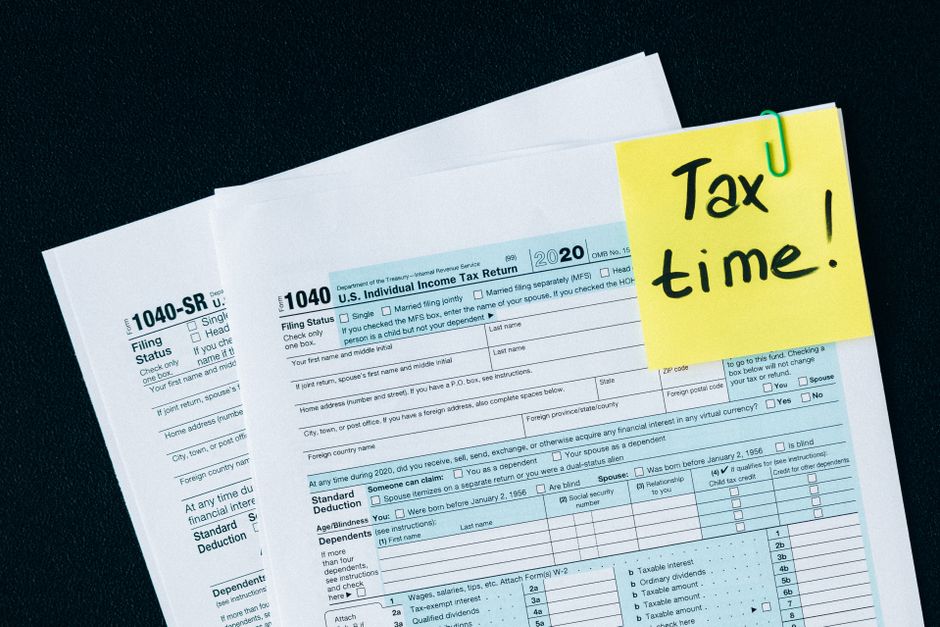
- High earners who exceed Roth IRA income limits can still access Roth benefits through a non-deductible traditional IRA followed by a conversion.
- The pro-rata rule can create an unexpected tax bill — knowing it before you start is essential.
- Always verify current contribution limits and income thresholds at irs.gov before executing this strategy.
If your income is too high to contribute directly to a Roth IRA, you may feel locked out of one of the most powerful tax-advantaged retirement accounts available. The backdoor Roth IRA is a fully legal workaround that has helped millions of higher-earning savers access Roth’s tax-free growth. Understanding exactly how it works — and where it can go wrong — is the difference between a smart retirement move and an expensive tax surprise.
Table of Contents
1. What Is a Backdoor Roth IRA?
A Roth IRA is a retirement savings account where you contribute money you have already paid taxes on. In exchange, your money grows tax-free and qualified withdrawals in retirement are also tax-free. The catch: the IRS sets income thresholds above which you cannot contribute to a Roth IRA directly. Once your modified adjusted gross income (MAGI) exceeds those limits — which change annually — your direct contribution ability phases out and eventually disappears entirely.
The backdoor Roth IRA is not a special account type. It is a two-step process: you make a non-deductible contribution to a traditional IRA, and then convert that traditional IRA balance to a Roth IRA. Because there is no income limit on conversions (only on direct Roth contributions), this route remains open regardless of how much you earn.
Why does this exist? Congress has never explicitly banned this maneuver. While it has been debated in legislative proposals over the years, as of this writing it remains a lawful strategy. However, tax law can change, so staying current with legislation is wise.
Who Typically Uses It?
- Employees with high salaries who have maxed out other pre-tax accounts
- Business owners with strong earnings
- Dual-income households whose combined MAGI pushes them over Roth income limits
- Anyone who wants tax-free growth but earns too much for a direct contribution
2. How the Backdoor Roth IRA Works
The Two Core Steps
The mechanics involve two distinct financial transactions, typically done in close sequence:
The Pro-Rata Rule: The Most Important Concept
Here is where many beginners get tripped up. The IRS does not allow you to selectively convert only after-tax (non-deductible) money. If you have any pre-tax money sitting in traditional, SEP, or SIMPLE IRAs, the IRS treats all your IRA balances as one combined pool. A proportional share of every conversion is considered taxable.
Example for illustration (hypothetical numbers only):
Suppose you have $90,000 in a pre-tax traditional IRA from prior years and you add a $10,000 non-deductible contribution, giving you a total IRA balance of $100,000. Your after-tax percentage is 10% ($10,000 / $100,000). When you convert $10,000 to Roth, only 10% — or $1,000 — is tax-free. The remaining $9,000 is treated as taxable income. This is the pro-rata rule, and it can significantly reduce the efficiency of the backdoor strategy.
Roth IRA vs. Traditional IRA: Core Differences
| Feature | Traditional IRA | Roth IRA |
|---|---|---|
| Contribution tax treatment | Pre-tax (if deductible) or after-tax | After-tax (no upfront deduction) |
| Growth | Tax-deferred | Tax-free |
| Withdrawals in retirement | Taxed as ordinary income | Tax-free (qualified) |
| Required Minimum Distributions (RMDs) | Yes, starting at the IRS-specified age | None during the owner’s lifetime |
| Income limit to contribute | None (deductibility has limits) | Yes — phased out above a threshold |
| Income limit to convert | None | N/A (conversion, not contribution) |
Form 8606: Non-Negotiable Paperwork
Every year you make a non-deductible IRA contribution, you must file IRS Form 8606 with your tax return. This form tracks your “basis” — the after-tax money you have put into traditional IRAs. Without it, the IRS has no record that you already paid tax on those funds, and you could be taxed again on withdrawal or conversion. Keep copies of every Form 8606 indefinitely.
3. Step-by-Step: How to Execute the Strategy
4. Common Mistakes and Pitfalls to Avoid
Ignoring the Pro-Rata Rule
As described above, failing to account for existing pre-tax IRA money is the most costly beginner mistake. Before executing a backdoor Roth, assess whether it makes sense to roll pre-tax IRA balances into a current employer’s 401(k) plan (if the plan accepts rollovers). Moving pre-tax dollars out of IRAs can clear the slate, but this move has its own considerations — discuss with a professional.
Waiting Too Long to Convert
The longer your money sits in the traditional IRA before conversion, the more earnings accumulate. Those earnings are taxable upon conversion. Many practitioners recommend converting within days of contributing, sometimes called the “same-day” or “next-day” approach.
Skipping Form 8606
Without proper documentation of your basis, you risk being double-taxed. The IRS has no way to know your contribution was non-deductible unless you file this form. If you forgot to file it in prior years, it can often be filed retroactively, but correcting past omissions adds complexity.
Misunderstanding the Five-Year Rule
Roth IRAs have a five-year rule for penalty-free withdrawal of converted funds if you are under age 59½. Each conversion starts its own five-year clock. This is separate from the five-year rule on Roth IRA earnings. For most people using the backdoor strategy long-term, this is not a problem — but it matters if you think you might need the funds soon. For investor-education background, Investor.gov offers accessible explanations of retirement account rules.
Treating It as a DIY-Only Strategy
The backdoor Roth interacts with your overall tax picture — MAGI calculations, state taxes, interaction with other retirement accounts, and potential legislative changes. It is always worthwhile to have a CPA or tax advisor review your plan at least the first time.
Checklist
- [ ] Calculate your MAGI for the current year and confirm you exceed the Roth IRA direct contribution income limit (verify the current threshold at IRS.gov)
- [ ] Inventory all existing traditional, SEP, and SIMPLE IRA balances to assess your pro-rata rule exposure before contributing
- [ ] Make your non-deductible traditional IRA contribution and convert to Roth promptly — ideally within days — to minimize taxable earnings
- [ ] File IRS Form 8606 with your annual tax return to document the non-deductible contribution and the conversion; retain copies permanently
- [ ] Consult a qualified tax professional, especially if you have significant pre-tax IRA balances or are executing this strategy for the first time
Related Reading
- Fed Warsh, Gilead & Stock Picking: Economy Shifts in 2026
- AI Model Wars 2026: Qwen 3.8, Kimi & Open Access Surge
- Roth IRA vs Traditional IRA: How to Choose (Beginner Guide)
FAQ
Q: Is the backdoor Roth IRA legal?
A: Yes. It involves making a non-deductible traditional IRA contribution and then converting it to a Roth IRA — two transactions that are individually permitted under current IRS rules. Congress has periodically discussed restricting it, but as of this writing it remains lawful. Tax law can change, so monitor legislative developments each year.
Q: Can I do a backdoor Roth IRA if I already have a traditional IRA with pre-tax money in it?
A: You can, but the pro-rata rule will likely cause a portion of your conversion to be taxable. The larger your existing pre-tax IRA balance relative to your new after-tax contribution, the smaller the tax benefit. A common solution is to roll the pre-tax IRA balance into an employer 401(k) — if the plan allows it — before executing the backdoor strategy. A tax professional can help you evaluate this.
Q: What is the “mega backdoor Roth” and is it the same thing?
A: No, they are different strategies. The mega backdoor Roth uses after-tax contributions to a 401(k) plan (not an IRA) — contributions beyond the standard pre-tax limit — which are then converted or rolled over to a Roth account. Not all 401(k) plans permit this. It is a more complex strategy and also requires careful review of your specific plan documents and tax situation.
Disclaimer
This guide is for informational purposes only and is not tax, investment, or legal advice. Specific figures such as contribution limits, income thresholds, and tax rates change annually — verify current numbers at IRS.gov or other official sources. Consult a qualified professional for personal decisions.
Guide written as of: July 28, 2026
Guide produced by MoneyTechLab’s personal-finance editorial team.