
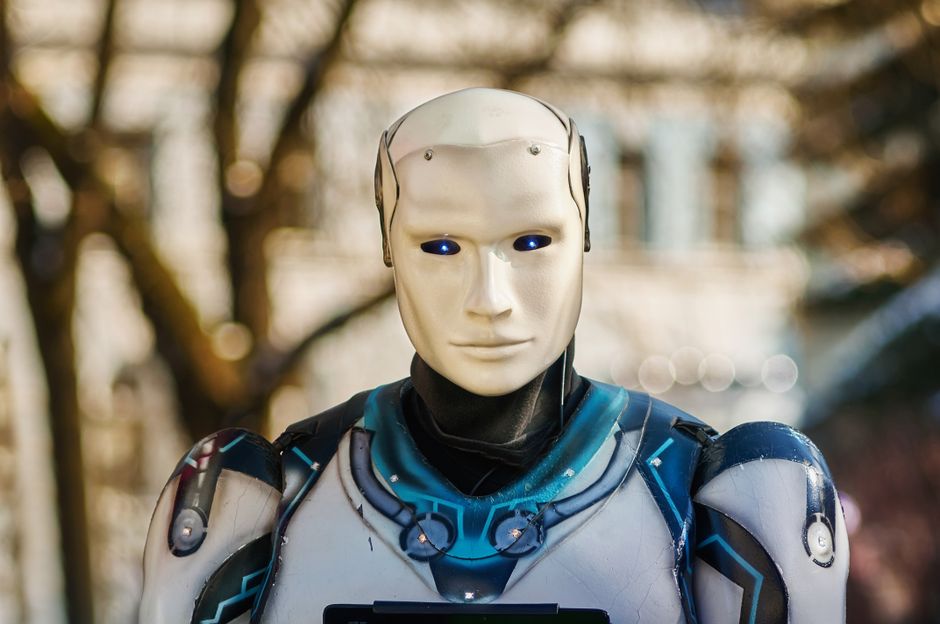
- Claude’s voice mode now runs on Opus and Sonnet models with direct Gmail, Google Calendar, and Slack integration across all platforms
- AMD launches its Helios rack-scale AI system, set to begin shipping to customers later in 2026, directly challenging Nvidia
- Germany’s Soofi S open 30B model disclosed accidental benchmark contamination, removed the affected test, and recalculated all results transparently
Today’s AI news cycle reflects three intersecting forces reshaping the industry: voice interfaces are rapidly maturing from novelty to productivity tools, hardware competition is intensifying at the infrastructure level, and the open-source AI community is stress-testing its own integrity. Readers tracking enterprise AI adoption, chip market dynamics, or the future of human-computer interaction will find all three threads worth following closely.
Table of Contents
Today’s Top News: 5 Updates (July 24, 2026)
1. OpenAI Brings Advanced Voice Mode to the ChatGPT Desktop App
What happened:
OpenAI has expanded its voice mode to the ChatGPT desktop application, enabling users to interact verbally with both ChatGPT Work and the Codex coding agent. The integration allows voice commands to complete tasks and control AI agents directly from the desktop environment.
Key numbers:
- 2 integrated products supported: ChatGPT Work and Codex
- 1 new platform added: desktop app (previously voice was mobile-first)
Why it matters:
The arrival of voice mode on the desktop marks a meaningful step toward ambient computing — where AI listens and acts rather than waiting for typed prompts. By linking voice to Codex, OpenAI is signaling that voice control is no longer just a conversational convenience but a workflow tool for developers and knowledge workers. This could reduce friction in software development pipelines, where context-switching between keyboard and AI interface is a persistent productivity drag. It also positions ChatGPT desktop as a more direct competitor to operating system-level AI assistants. Worth noting: the desktop environment typically hosts more complex, high-stakes professional tasks than mobile, meaning errors from voice misinterpretation may carry greater consequences — a factor users and enterprises will need to evaluate carefully.
📎 Source: TechCrunch AI | Published: July 24, 2026
2. AI Safety Guardrails Are Creating Real Friction for Offensive Cybersecurity Researchers
What happened:
TechCrunch spoke with multiple cybersecurity researchers who specialize in finding unknown vulnerabilities and developing exploit tools. These professionals report that AI guardrails implemented by OpenAI and Anthropic are materially hampering their legitimate work.
Key numbers:
- 2 major AI providers named: OpenAI and Anthropic
- Multiple researchers interviewed (exact count not specified in summary)
Why it matters:
Offensive security research — the practice of finding and demonstrating vulnerabilities before malicious actors do — is a cornerstone of modern digital defense. When AI models refuse to assist with tasks that look superficially dangerous but serve a protective purpose, the guardrails designed to prevent harm may paradoxically weaken security outcomes. This is a nuanced policy dilemma: the same prompt that helps a penetration tester could theoretically assist a bad actor, yet blanket refusals push legitimate researchers toward less capable tools or workarounds. The issue could become more acute as AI systems grow more central to security workflows. It may also prompt calls for verified professional access tiers — a concept that both OpenAI and Anthropic have reportedly explored but not yet fully operationalized.
📎 Source: TechCrunch AI | Published: July 24, 2026
3. AMD Challenges Nvidia With the Helios Rack-Scale AI System
What happened:
AMD has announced the Helios, a rack-scale AI system designed to compete directly with Nvidia’s dominant AI infrastructure offerings. The company confirmed that Helios will begin shipping to customers later in 2026.
Key numbers:
- 1 new system announced: Helios rack-scale AI platform
- Shipping timeline: later in 2026
Why it matters:
The AI chip market has been effectively a Nvidia monoculture for the past several years, with H100 and H200 GPUs setting the standard for training and inference workloads. AMD’s Helios represents a rack-scale approach — meaning the competitive unit is an entire integrated system rather than a single chip — which is increasingly how hyperscalers and large enterprises evaluate AI infrastructure. This architecture could appeal to buyers frustrated by Nvidia’s supply constraints or pricing power. However, the true test will come post-shipment, when performance benchmarks in real-world workloads can be compared head-to-head. AMD’s ROCm software ecosystem has historically lagged CUDA, and whether Helios can bridge that gap may determine adoption velocity more than the hardware specs alone.
📎 Source: TechCrunch AI | Published: July 23, 2026
4. Germany’s Soofi S Open 30B Model Tops Benchmarks — and Discloses a Data Contamination Issue
What happened:
A German AI consortium has released Soofi S, an open-weight 30-billion-parameter model that claims top benchmark performance in both English and German. In version 3.0 of its technical report, the consortium acknowledged that questions from the GPQA science benchmark were accidentally included in the model’s training data — a contamination issue caught by the community through examination of the publicly available dataset. The team removed GPQA from its evaluation suite and recalculated all results.
Key numbers:
- Model size: 30 billion parameters
- Benchmark affected: GPQA (science benchmark)
- Tech report version disclosing the issue: 3.0
Why it matters:
Benchmark contamination — where test data leaks into training sets — is one of the most persistent credibility problems in AI development. What makes this case notable is not the error itself but the response: the consortium publicly disclosed the contamination, traced it to a specific dataset, removed the benchmark, and updated its results. This is precisely the kind of transparency the AI research community has been advocating for. It also demonstrates that open data practices — which allowed the community to identify the issue in the first place — serve as a form of distributed peer review. For multilingual AI development, Soofi S’s strong English and German performance is strategically significant for European enterprise adoption, particularly given EU AI Act compliance pressures.
📎 Source: The Decoder | Published: July 24, 2026
5. Claude’s Voice Mode Upgrades to Opus and Sonnet Models With Productivity App Integration
What happened:
Anthropic has upgraded Claude’s voice mode so that conversations now run on its most capable models — Opus and Sonnet — across all platforms. The update also adds direct integration with Gmail, Google Calendar, and Slack, and Claude can currently compose and send emails directly by voice.
Key numbers:
- 2 model tiers now powering voice: Opus and Sonnet
- 3 productivity integrations added: Gmail, Google Calendar, Slack
- Platforms covered: all platforms
Why it matters:
Claude’s ability to compose and send emails by voice is a genuine differentiator today — according to the source, neither OpenAI nor Google currently offer that capability through their voice assistants. Running voice on Opus and Sonnet rather than lighter models means users get higher reasoning quality during spoken interactions, which matters for complex scheduling, drafting, or multi-step task coordination. The Gmail, Calendar, and Slack integrations move Claude closer to the “executive assistant” use case that enterprise buyers find compelling. Worth noting: the source highlights that OpenAI and Google produce more naturally sounding voice output, suggesting Anthropic’s edge is functional capability rather than audio fidelity — a trade-off that different user segments will weigh differently depending on whether they prioritize task completion or conversational feel.
📎 Source: The Decoder | Published: July 24, 2026
Key Analysis — Why This Matters
1. Common Trend — Voice as the New Interface Layer:
Three of today’s five stories directly involve voice AI: OpenAI expanding desktop voice, Claude upgrading to its most powerful models with productivity integrations, and the implicit competitive pressure between them. Voice is transitioning from a supplemental feature to a primary interaction modality, and the race is no longer about who sounds most natural but who can take the most consequential actions on a user’s behalf.
2. Market/Industry Impact — Competition Is Broadening on Every Axis:
On the hardware side, AMD’s Helios could introduce genuine pricing and supply-chain competition to a market Nvidia has largely controlled. On the software side, Claude’s email-sending capability and OpenAI’s Codex voice integration suggest that AI assistants may increasingly compete on workflow depth rather than conversational breadth. Enterprises evaluating AI platforms may find that feature differentiation — not raw model performance — drives procurement decisions through the remainder of 2026.
3. What to Watch — Trust, Transparency, and Access Policy:
The Soofi S contamination disclosure and the cybersecurity guardrail debate both point to a maturing conversation about AI governance. The open-source community’s ability to catch Soofi S’s data issue demonstrates the value of public model weights and datasets. Meanwhile, the guardrail friction reported by security researchers suggests that AI providers may need more granular, role-verified access policies — a development worth tracking at both OpenAI and Anthropic over the coming months.
Affected Sectors
| Sector | Impact Level | Note |
|---|---|---|
| Enterprise Productivity Software | ⭐⭐⭐ | Voice-to-action integrations with Gmail, Slack, and Calendar reshape workflow tooling |
| AI Infrastructure / Semiconductors | ⭐⭐⭐ | AMD Helios introduces rack-scale competition to Nvidia’s dominant position |
| Cybersecurity | ⭐⭐⭐ | Guardrail friction directly affects offensive research capacity and defense readiness |
| Open-Source AI / Research | ⭐⭐ | Soofi S transparency sets a precedent for benchmark integrity practices |
| Multilingual / European AI Market | ⭐⭐ | Soofi S’s English-German bilingual performance is relevant to EU enterprise adoption |
| Consumer AI Applications | ⭐ | Voice quality improvements affect end-user experience but not yet core workflows |
Reader Checklist
- ✅ If you use ChatGPT professionally, test the new desktop voice mode with Codex for coding workflows to assess productivity gains
- ✅ Evaluate Claude’s Gmail and Slack voice integrations if your team runs on Google Workspace or Slack — the direct email-send capability is currently unique among major AI assistants
- ✅ If you follow AI infrastructure procurement, track AMD Helios shipment announcements and early customer benchmarks against Nvidia equivalents when available later in 2026
- ✅ For AI researchers and developers, review Soofi S’s technical report v3.0 as a case study in responsible benchmark contamination disclosure
- ⚠️ If your organization uses AI tools for security research, review current guardrail policies at both OpenAI and Anthropic — and document use cases that may require escalated access or alternative tooling
Related Reading
- AI Trends 2026: IPO Records, Broken Benchmarks & Open-Source Wins
- Capital Gains Tax Basics: Short-Term vs Long-Term
- HSA Explained: Triple Tax Advantage & Eligibility Rules
Frequently Asked Questions
Q. What makes Claude’s voice mode different from OpenAI’s voice mode as of July 2026?
A. The key functional difference is that Claude can currently compose and send emails directly by voice through Gmail integration — a capability that OpenAI’s voice mode does not yet offer. Claude also runs its voice conversations on its most powerful Opus and Sonnet models, and integrates with Google Calendar and Slack for task execution. OpenAI’s voice mode, according to the source, produces more naturally sounding audio output, meaning the two assistants are currently differentiated by audio quality versus task capability.
Q. Why does AMD’s Helios matter if Nvidia already dominates AI hardware?
A. Nvidia’s dominance has created supply constraints and pricing power that many enterprises and cloud providers find limiting. AMD’s Helios is a rack-scale system — an integrated infrastructure unit rather than a standalone chip — which is the purchasing format large AI operators increasingly prefer. If Helios delivers competitive performance in real-world workloads after it begins shipping later in 2026, it could give buyers meaningful leverage in negotiations and diversify the AI hardware supply chain. The critical variable will be AMD’s ROCm software ecosystem, which has historically been less mature than Nvidia’s CUDA platform.
Q. Should cybersecurity professionals be worried about AI guardrails affecting their work?
A. Based on reporting from multiple researchers in the TechCrunch article, the concern is real and current. Guardrails at OpenAI and Anthropic can block or limit assistance with tasks that are standard in offensive security research — vulnerability discovery and exploit development — even when the intent is clearly defensive. This does not mean AI is useless for security work, but practitioners may need to document their use cases carefully, explore professional access tiers if available, or maintain familiarity with open-source AI alternatives that apply different filtering standards. The situation is actively evolving, so monitoring policy updates from both providers is advisable.
Disclaimer
This post is curated information from official press releases and major media outlets.
- Not specific investment or legal advice
- Analysis reflects views at time of writing and may change
- Consult professionals for specific decisions
✍️ Credit Note: News sourced from TechCrunch AI and The Decoder, published July 23–24, 2026. Analysis by MoneyTechLab editorial team.
⚠️ Disclaimer
This post covers AI industry news.
It is not investment advice for any company, technology, or service mentioned.
Specs and pricing are as of publication and subject to change.
✍️ Written by
Credit Note
A finance and accounting practitioner with 20+ years of hands-on accounting
experience at a Korean credit rating agency. This post is a curated news summary
based on official press releases and major media coverage; all facts can be
verified through the source links.
Drafts are AI-assisted and human-reviewed before publishing.
📧 Questions: [email protected]
💌 Daily newsletter: Subscribe